Leave A Message

FAQ
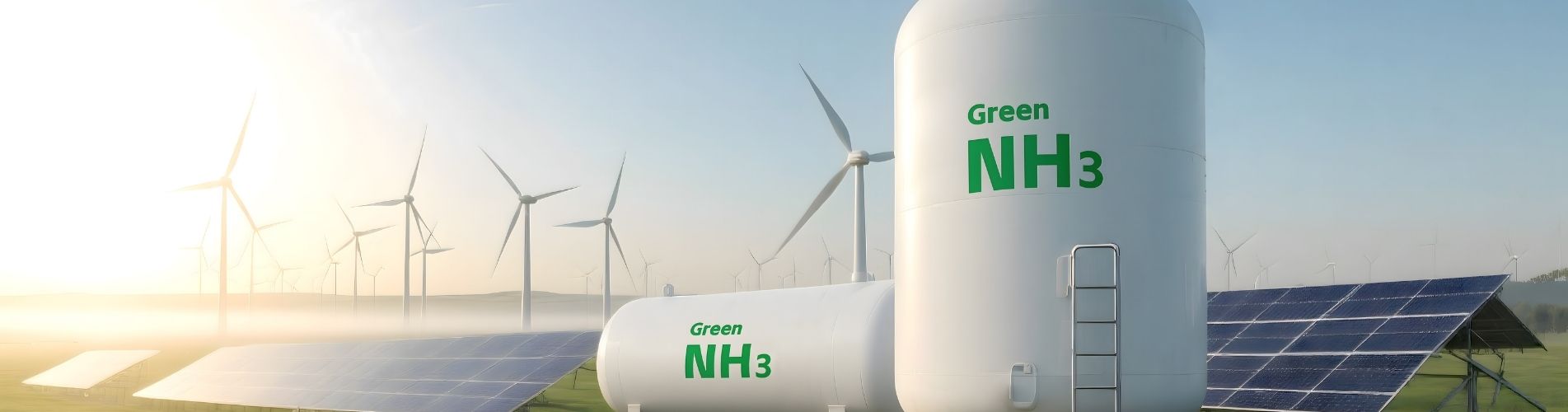
A small-scale green ammonia plant is a modular production system that uses renewable electricity, water, and air to produce ammonia at a distributed scale. In a typical process, renewable electricity powers water electrolysis to produce hydrogen, while nitrogen is separated from air. Hydrogen and nitrogen are then converted into ammonia through an ammonia synthesis system.
Compared with conventional large-scale ammonia plants, small-scale green ammonia plants are not designed to replace world-scale production. Their value lies in serving specific applications such as local fertilizer supply, renewable energy conversion, pilot projects, remote industrial use, and on-site decarbonization.
For this type of project, modularization is especially important. A modular green ammonia plant can be factory-built, skid-mounted, or containerized, making it easier to transport, install, commission, and operate.
Yes. Ammonia can be produced at 100–5000 tons per year scale, but the project logic is different from that of a conventional mega-scale ammonia plant.
A 100 TPA system may be suitable for R&D, pilot projects, universities, or demonstration purposes. A 500 or 1000 TPA project may support local fertilizer trials, renewable ammonia demonstration, or remote site supply. A 2000 or 5000 TPA modular green ammonia plant can be used for stronger commercial entry, regional production, or industrial applications.
The key question is not whether small-scale production can compete with large ammonia plants on every cost metric. Instead, project developers should ask whether local production creates value through reduced logistics, improved supply security, renewable power utilization, lower emissions, or faster project deployment.
The main inputs for green ammonia production are renewable electricity, water, and air.
Renewable electricity is used to produce hydrogen through electrolysis. Water is the hydrogen source. Air provides nitrogen, which is separated through a nitrogen generation system. These two gases are purified, compressed, and fed into the ammonia synthesis loop.
In addition to the main inputs, a project also needs supporting utilities and systems such as cooling, instrument air, electrical distribution, process control, safety monitoring, storage, and sometimes hydrogen storage or energy storage depending on the power supply strategy.
For small-scale green ammonia projects, the integration of these systems is critical. Hydrogen generation, nitrogen generation, ammonia synthesis, control logic, safety protection, and commissioning must work together as one complete production solution.
Key feature: The production process does not rely on fossil energy and achieves zero carbon emissions. For a detailed process, please refer to the Kapsule 2 Green Ammonia™ video.
The delivery timeline depends on capacity, technical scope, applicable standards, site conditions, logistics, and commissioning requirements.
As a reference, for a 2000 TPA modular green ammonia project, equipment delivery may take around six months when Chinese standards are applied. If the project follows U.S. standards or other international standards with more specific compliance requirements, equipment delivery may take around eight months. After logistics, installation, and commissioning are included, a complete plant may be able to reach operation within 12 months under suitable project conditions.
This timeline is not a fixed guarantee for every project. Local permitting, civil construction, utility connection, inspection, transportation, and customer-side preparation can all affect the final schedule. Early communication between the customer, supplier, local partners, and regulatory parties is essential for keeping the project on track.
Yes. Green ammonia can be produced in fully off-grid projects, provided that the overall energy and process design is carefully planned.
The main challenge is the instability of renewable power generation. Wind and solar resources can fluctuate by hour, day, and season. This affects the operating strategy of the hydrogen production unit, ammonia synthesis system, storage system, and control logic.
For off-grid projects, developers need to consider whether to include battery storage, hydrogen storage, or other buffering systems. They also need to evaluate whether the ammonia production unit will run continuously, operate at variable load, or follow the renewable power profile. These decisions directly affect equipment sizing, operating cost, system complexity, and project economics.
KAPSOM has developed solutions for off-grid and renewable-based green ammonia projects. For this type of application, the key is to design the plant as an integrated system rather than treating renewable power, hydrogen, nitrogen, and ammonia synthesis as separate parts.
A reliable green ammonia technology provider should have both technical capability and project delivery experience.
For 100–5000 TPA projects, developers should look for a supplier with proven experience in green ammonia synthesis, a clear small-scale capacity range, modular or skid-mounted design capability, and the ability to integrate hydrogen generation, nitrogen generation, ammonia synthesis, process control, safety systems, and commissioning support.
Project delivery capability is also important. A supplier should be able to support installation, commissioning, operator training, troubleshooting, and adaptation to local standards. This is especially important for international projects, where pressure vessel requirements, electrical standards, environmental regulations, safety rules, and permitting processes may vary by country.
KAPSOM focuses on modular green ammonia production systems for small- and medium-scale projects. Its solution covers integrated hydrogen generation, nitrogen generation, ammonia synthesis, process control, modular equipment design, intelligent operation, commissioning support, and international project delivery for distributed green ammonia applications.
Yes, a modular ammonia plant can be suitable for fertilizer-related applications, especially when the goal is local or distributed production rather than large-scale commodity supply.
For regions that rely heavily on imported ammonia or nitrogen fertilizer, local green ammonia production may help reduce import dependence, improve supply security, and lower transport-related costs. It can also support local fertilizer trials, regional agricultural supply, or early-stage green fertilizer production.
However, the feasibility of a fertilizer project depends on several factors, including local fertilizer demand, ammonia storage and handling requirements, downstream conversion needs, electricity cost, operating schedule, and regulatory conditions. A modular green ammonia system is most suitable when local use, flexibility, or supply resilience creates additional value.
The cost of green ammonia is usually calculated by considering both capital expenditure and operating expenditure.
Capital expenditure, or CAPEX, may include process equipment, modular skids, storage systems, electrical systems, civil works, installation, logistics, engineering, and project management. Operating expenditure, or OPEX, may include electricity, water, catalyst, maintenance, labor, utilities, consumables, and periodic replacement costs.
A common method for evaluating green ammonia cost is the Levelized Cost of Ammonia, often referred to as LCOA or LOCA. This method estimates the average cost of ammonia production over the lifetime of the project. In addition to CAPEX and OPEX, the calculation should also consider annual operating hours, plant load factor, equipment lifetime, financing assumptions, and expected ammonia output.
For small-scale green ammonia projects, the cost should not be evaluated only as a production cost per ton. Developers should also consider the value of local production, avoided transport costs, supply security, renewable energy utilization, carbon reduction, and potential downstream benefits.
Project developers can use KAPSOM’s online LOCA calculator as a starting point to estimate green ammonia production cost and assess project feasibility. A more detailed cost analysis should be based on site-specific data, including electricity price, operating schedule, capacity, local construction cost, logistics, storage requirements, and downstream application.
Small-scale green ammonia can be used in several industries and application scenarios.
Agriculture and fertilizer production are among the most direct applications, especially in regions where local nitrogen supply is important. Renewable energy developers may use green ammonia as a way to convert wind, solar, or hydropower into a storable chemical product. Industrial users may consider green ammonia for decarbonization, fuel substitution, hydrogen storage, or chemical feedstock applications.
Remote areas, mining sites, ports, islands, industrial parks, research institutions, and demonstration projects may also benefit from modular green ammonia production. In these cases, the value of a small-scale plant often comes from location flexibility, supply security, reduced transport dependence, and the ability to test new business models before large-scale investment.
Green ammonia equipment usually refers to individual units or machines, such as an electrolyzer, nitrogen generation unit, compressor, ammonia synthesis reactor, storage system, or control cabinet.
A green ammonia production solution is broader. It refers to an integrated system that connects hydrogen generation, nitrogen generation, ammonia synthesis, heat exchange, separation, storage, electrical systems, process control, safety design, commissioning, and operational support.
This distinction is important for small-scale projects. A successful 100–5000 TPA green ammonia plant is not simply a collection of separate equipment. Each unit must be properly matched and integrated. If the system design is incomplete, the project may face problems during installation, commissioning, or operation.
This is why project developers should evaluate whether a supplier only provides equipment, or whether it can also provide process integration, modular engineering, project delivery, commissioning support, and operator training.
Green Ammonia: Costs are mainly determined by renewable electricity prices, electrolyzer efficiency, and plant scale.
Blue Ammonia: Produced via conventional fossil-fuel routes combined with carbon capture (CCS). Its cost depends on natural gas prices and the carbon-capture rate.
For example:
Based on current quotations from KAPSOM, green ammonia is priced at approximately USD 600–800 per ton.
Northwest Europe prices rise 4% to $676/mt; Asia edges lower
Blue ammonia FOB US Gulf reported at a minimum of $400–$600/mt
Japan-Korea Ammonia Price assessed at $435–$475/mt CFR
According to Mordor Intelligence, global green ammonia production is expected to reach 270,000 tons in 2025, and grow to 5.41 million tons by 2030, with a compound annual growth rate (CAGR) as high as 97%.






Leave A Message
Scan to Wechat :

 IPv6 network supported